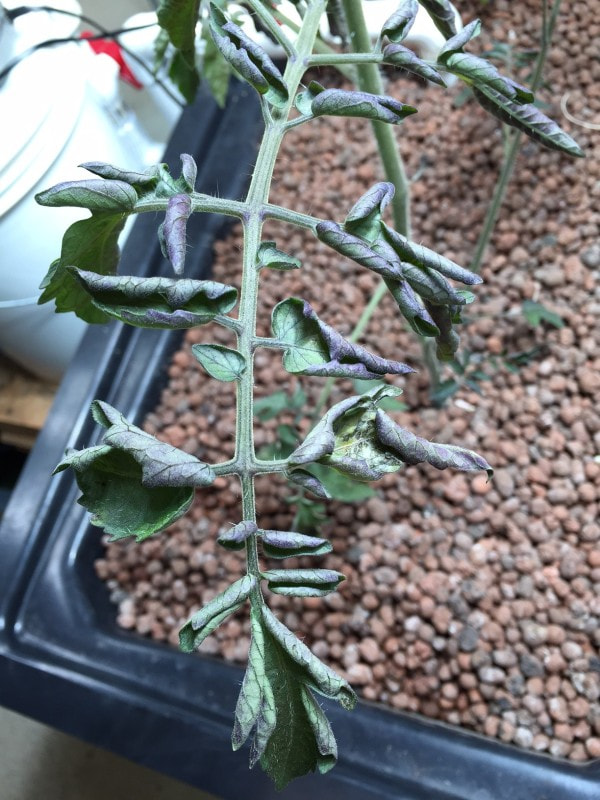
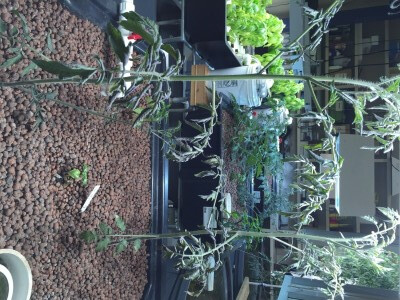
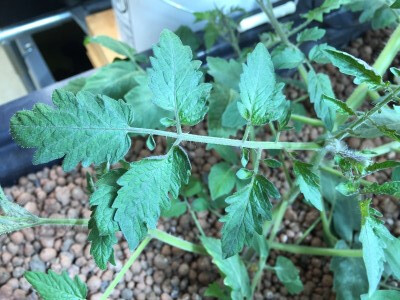
Heres a much longer explanation @Aquaman
In hydroponic and aquaponic recirculating systems, most nutrients need to remain dissolved. UV sterilizers expose the circulating solution to high-energy ultraviolet light. That light can:
- Break iron chelates apart, especially Fe-EDTA and Fe-DTPA.
- Convert soluble iron into insoluble ferric hydroxide / hydrous ferric oxide.
- Create fine rust-colored precipitate that coats plumbing, roots, filters, pumps, and the quartz sleeve of the UV unit.
- Drag other nutrients down with the iron precipitate, especially trace metals and sometimes boron through adsorption or co-precipitation.
- Reduce UV performance over time, because the iron coating blocks UV transmission through the quartz sleeve.
- Make EC misleading, because EC can still look acceptable while specific micronutrients are no longer in a usable form.
That is why the quote says the iron loss must be corrected downstream by adding iron chelate after the UV sterilizer.
1. Bioavailable does not mean “present”; it means “present in a plant-usable form”
In hydroponics and aquaponics, plants mainly take up nutrients as dissolved ions or soluble complexes. Missouri Extension explains that hydroponic roots take up nutrients in ionic form, and that pH strongly affects nutrient solubility and availability; EC only tells you total dissolved conductivity, not whether each individual nutrient is balanced or available.
That matters because UV sterilization usually affects speciation.
Speciation means the exact chemical form of the nutrient:
| Nutrient form |
Example |
Plant availability |
| Dissolved free ion |
Fe²⁺, Mn²⁺, Zn²⁺, NO₃⁻, K⁺ |
Usually available if pH is right |
| Soluble chelated form |
Fe-DTPA, Fe-EDDHA, Mn-EDTA |
Available because the chelate keeps the metal dissolved |
| Insoluble precipitate |
Fe(OH)₃, FeOOH, iron phosphate, manganese oxide |
Poorly available; may settle, coat surfaces, or get filtered out |
| Adsorbed nutrient |
boron or phosphate stuck to iron oxide sludge |
Present but not freely available |
| Organic-complexed nutrient |
metal bound to humics, fulvics, amino acids, fish-waste organics |
Availability depends on stability and microbial processing |
UV sterilization pushes some nutrients from the first two categories into the last three categories.
2. Iron is the biggest problem because hydroponic iron depends on chelation
Iron is naturally difficult in oxygenated water. In hydroponic or aquaponic solution, the conditions are almost perfect for iron to become unavailable:
- The solution is oxygenated.
- The pH is usually around 5.5–6.8 in hydroponics, and often closer to 6.5–7.2 in aquaponics.
- There is carbonate alkalinity.
- There is phosphate.
- There are biofilms, organic matter, and surfaces for precipitates to form.
- The water is being repeatedly exposed to UV.
Unchelated iron, especially ferric iron, does not stay soluble very well under those conditions. This is why hydroponic formulas usually use chelated iron such as Fe-EDTA, Fe-DTPA, Fe-EDDHA, Fe-HBED, or similar forms.
The USDA ARS summary of Albano and Miller’s work on Fe-DTPA is directly relevant. They found that irradiating Fe-DTPA-containing nutrient solutions caused loss of both Fe-chelate and soluble Fe, formation of an iron-rich precipitate, and a rise in pH. They also found that Fe chelates absorb in blue and UV wavelengths, and filtering out those wavelengths eliminated the photodegradation.
That is essentially the same mechanism Resh is warning about.
3. What UV does to chelated iron
Chelated iron is like a soluble cage around iron. The chelate ligand holds the iron in solution and prevents it from reacting with oxygen, hydroxide, carbonate, phosphate, and other components in the water.
For example:
- Fe-EDTA = iron held by EDTA
- Fe-DTPA = iron held by DTPA
- Fe-EDDHA = iron held by EDDHA
- Fe-HBED = iron held by HBED
UV light can break the chelate ligand or weaken the iron-ligand bond. Once that happens, the iron is no longer protected.
A simplified sequence looks like this:
Step 1: UV hits the chelate
Fe-chelate + UV light → damaged chelate + released iron species
The iron-chelate absorbs UV/blue light. The energy can trigger ligand-to-metal charge transfer and radical reactions. The ligand is altered or fragmented.
Step 2: released iron reacts with oxygen and water
In an aerated recirculating system:
Fe²⁺ → Fe³⁺
Then ferric iron hydrolyzes:
Fe³⁺ + water → ferric hydroxide / hydrous ferric oxide particles
Simplified:
Fe³⁺ + 3OH⁻ → Fe(OH)₃ ↓
Or more generally:
FeOOH / Fe₂O₃·nH₂O / hydrous ferric oxide
This is basically a hydrated rust-like precipitate.
Step 3: precipitated iron is no longer readily plant available
Once iron becomes hydrous ferric oxide, it is no longer behaving like soluble Fe-DTPA or Fe-EDDHA. It can coat plumbing, filters, roots, tanks, and the quartz sleeve of the UV sterilizer. That lines up with the Resh quote: the iron precipitate coated lines and the quartz sleeve, reducing UV transmission.
4. Why the quartz sleeve gets coated
Most UV sterilizers have a UV lamp inside a quartz sleeve. Quartz is used because it transmits UV light better than ordinary glass.
When iron precipitates, the hydrous ferric oxide particles are sticky. They form a brown, orange, yellow, or reddish coating on surfaces. The quartz sleeve is one of the worst places for this to happen because the coating blocks the UV light before it reaches the water.
That causes two problems at once:
- Nutrient loss: the iron is no longer soluble and available.
- Sterilizer performance loss: the sleeve fouls, UV transmission falls, and actual pathogen kill drops.
So the system can reach a bad state where you are still running the UV unit, still paying for electricity, still degrading chelates, but getting less sterilization because the sleeve is coated.
5. Why Fe-EDTA and Fe-DTPA are more vulnerable than stronger chelates
Not all iron chelates behave the same.
Fe-EDTA is cheap and common, but it is less stable at higher pH and more vulnerable in many recirculating systems. Fe-DTPA is more stable than Fe-EDTA, but it can still photodegrade. Fe-EDDHA and some phenolic chelates are generally more stable under higher-pH conditions and can better resist loss of iron availability.
The University of Florida Extension notes that chelate effectiveness depends strongly on pH, and that EDDHA-chelated iron is especially stable above pH 7. It also explains that chelate stability matters because stable chelates keep micronutrients bioavailable longer.
A 2025 study specifically evaluated UV degradation of iron chelates for hydroponic systems and found that different Fe chelates degrade at different rates under UV, with phenolic chelates showing greater resistance than non-phenolic chelates in that test system.
Practical ranking for UV-exposed recirculating systems, generally speaking:
| Iron source |
UV / pH concern |
Practical comment |
| Iron sulfate |
Very poor in recirculating oxygenated solution |
Precipitates easily unless very acidic |
| Fe-EDTA |
Most vulnerable common chelate |
Better at lower pH, worse as pH rises |
| Fe-DTPA |
Better than EDTA |
Still can photodegrade under UV |
| Fe-EDDHA |
Much more stable at higher pH |
Often preferred in aquaponics, but can tint water red/pink |
| Fe-HBED / Fe-EDDHA variants |
Often strong stability |
More expensive, product-dependent |
For aquaponics, Fe-DTPA and Fe-EDDHA are usually much more appropriate than Fe-EDTA because aquaponic systems often run closer to neutral pH than pure hydroponics.
6. Why iron becomes unavailable so quickly after chelate breakdown
Iron is different from nutrients like nitrate, potassium, calcium, magnesium, and sulfate. Those macronutrients generally remain dissolved over a wide range of normal hydroponic conditions.
Iron does not.
In oxygenated water, unprotected iron rapidly shifts toward ferric iron and then hydrolyzes into insoluble hydroxides/oxides. That is why plants can show iron deficiency even when total iron is technically present in the system.
The plant does not need “iron somewhere.” It needs iron at the root surface in a reducible, soluble, or chelated form.
When UV destroys the chelate, the solution may go from:
Fe-DTPA in solution → soluble, root-available iron
to:
hydrous ferric oxide particles → mostly unavailable iron sludge
That is the main nutrient-bioavailability problem.
7. Why manganese can also be reduced
Manganese is also redox-sensitive, though not exactly like iron.
Plant-available manganese is usually Mn²⁺ in solution. Under more oxidizing conditions, manganese can form less-soluble manganese oxides/hydroxides, especially as pH rises and in the presence of oxidants, catalytic surfaces, biofilms, or strong oxidative treatment.
UV by itself is not always enough to oxidize all Mn²⁺ directly, but UV systems can create conditions that reduce soluble manganese:
- UV can damage Mn chelates or organic complexes.
- UV can create reactive oxygen species, especially if peroxide or ozone is involved.
- Iron hydroxide precipitates provide surfaces that can adsorb or co-remove trace metals.
- Manganese can become associated with iron/manganese oxide surfaces.
- Filtration after UV can physically remove precipitated or adsorbed manganese.
So when Mohyuddin/Resh reported manganese dropping by more than 20%, the likely explanation is not that elemental manganese vanished. It was probably converted into a less soluble or filterable/adsorbed fraction.
This matters because manganese deficiency can look similar to iron deficiency in some ways, but the tissue pattern differs. Iron deficiency usually hits the newest growth first because iron is poorly mobile in plants. Manganese deficiency can also show interveinal chlorosis, often with speckling or mottling depending on crop.
8. Why boron can drop even though boron is not a metal like iron
Boron is trickier.
Boron is not a transition metal like iron, manganese, zinc, or copper. It does not behave like Fe²⁺/Fe³⁺ or Mn²⁺/Mn⁴⁺. In water, boron is mainly present as boric acid or borate depending on pH. A review of boron chemistry notes that boron in aqueous solution is mainly boric acid or borate, and that at pH below about 9, boric acid is the dominant form.
So why would boron drop during UV sterilization?
Most likely mechanisms:
1. Adsorption to freshly formed iron oxide
Fresh hydrous ferric oxide is an excellent adsorbent. It has a high surface area and many reactive hydroxyl groups. Boron can adsorb to iron oxides. One study on boron adsorption onto iron oxide reported that boron adsorption on FeO(OH) occurs through replacement of a water molecule by boric acid, forming surface complexes.
That means if UV causes iron to precipitate as hydrous ferric oxide, that new iron sludge can scavenge boron from the solution.
2. Coagulation / co-precipitation
As iron precipitates, it can form floc. That floc can trap or bind other dissolved or colloidal nutrients. If you then filter the solution, settle solids, or let sludge accumulate, those nutrients are functionally removed from the circulating nutrient pool.
3. Interaction with organics
Boron can complex with hydroxyl-rich organic molecules. Aquaponics contains dissolved organic carbon from fish feed, fish waste, biofilms, and plant roots. UV can break some organic compounds apart, changing how boron partitions between dissolved, adsorbed, and particulate fractions.
4. Analytical “soluble fraction” loss
When older studies report nutrient “loss,” they often mean loss from the soluble fraction measured after sampling/filtration. Boron may still be in the system but attached to iron floc, biofilm, filter sludge, or precipitate.
So boron is probably not being destroyed by UV. It is being removed from the plant-available dissolved pool.
9. UV plus hydrogen peroxide is even harsher on chelates
The Resh passage says hydrogen peroxide injection before UV can improve sterilizer effectiveness. That is true from a disinfection/oxidation standpoint, but it comes with a nutrient-chemistry tradeoff.
UV + hydrogen peroxide creates an advanced oxidation process.
Simplified:
H₂O₂ + UV → hydroxyl radicals
Hydroxyl radicals are extremely reactive. They help oxidize organic contaminants and microbes, but they can also attack:
- EDTA
- DTPA
- amino acid chelates
- humic substances
- fulvic substances
- organic acids
- vitamins
- root exudates
- microbial metabolites
- some organic wetting agents or biostimulants
That means UV + peroxide may be excellent for sanitation, but it is more aggressive toward the organic chemistry that keeps micronutrients soluble.
So yes, peroxide before UV can improve pathogen kill and sleeve cleanliness, but from a nutrient standpoint it can increase chelate destruction and micronutrient precipitation unless the system is designed to compensate.
10. UV does not usually harm all nutrients equally
The biggest risk is with micronutrients that depend on chelation or redox stability.
High-risk nutrients under UV sterilization
| Nutrient |
Why it is vulnerable |
| Iron |
Chelates photodegrade; unchelated Fe³⁺ precipitates quickly |
| Manganese |
Can oxidize, adsorb to oxides, or co-precipitate |
| Copper |
Strongly binds organics/chelates; can adsorb to iron oxides |
| Zinc |
Can adsorb to iron/manganese oxides or precipitates at higher pH |
| Boron |
Can adsorb to fresh iron oxide/hydroxide surfaces |
| Molybdenum |
Can adsorb to oxides depending on pH and competing ions |
| Phosphorus |
Can bind strongly with iron precipitates as iron phosphate or adsorbed phosphate |
Lower-risk nutrients under normal UV
| Nutrient |
Why less vulnerable |
| Nitrate |
Very stable under normal UV sterilizer exposure |
| Potassium |
Remains as K⁺; not chelated |
| Calcium |
Usually not directly UV-sensitive, but can precipitate with carbonate/phosphate at high pH |
| Magnesium |
Similar to calcium, less directly UV-sensitive |
| Sulfate |
Generally stable |
| Chloride |
Generally stable |
This is why EC can look fine after UV while plants still develop micronutrient deficiencies. EC is dominated by nitrate, potassium, calcium, magnesium, sulfate, chloride, and other major ions. Losing 1–3 ppm iron barely changes EC, but it can dramatically affect plant health.
11. Why UV can increase pH or make pH drift worse
Albano and Miller observed a rise in pH when Fe-DTPA photodegraded in nutrient solution.
That matters because pH controls micronutrient availability. Missouri Extension gives a general hydroponic optimum of about pH 5.5–6.5 for most crops, with the broader water-quality table listing pH 5.5–7.
If UV exposure causes chelate degradation and pH drift upward, micronutrients become even less available. This can create a feedback loop:
- UV damages Fe chelate.
- Iron precipitates.
- pH rises or becomes harder to control.
- Higher pH further destabilizes weaker chelates.
- More iron, manganese, zinc, copper, and phosphorus become less available.
- Plants show deficiency even though the reservoir was dosed correctly.
That is especially relevant in aquaponics because aquaponic pH often runs higher than ideal hydroponic pH. Fish, nitrifying bacteria, alkalinity management, calcium carbonate, potassium bicarbonate, and system biology often push growers toward pH ranges where iron availability is already difficult.
12. Aquaponics is more vulnerable than clean hydroponics in some ways
Aquaponics has additional complications:
More organic matter
Fish feed, feces, dissolved organic carbon, biofilms, root exudates, and mineralization products all absorb UV and participate in oxidation chemistry. Organic matter can reduce UV transmission, meaning the sterilizer must work harder.
More suspended solids
Fine solids shield microbes from UV and foul the quartz sleeve. If the solution is not filtered well before UV, the unit may underperform.
Higher pH
Many aquaponic systems run around pH 6.6–7.2. That is comfortable for nitrifying bacteria and fish, but less ideal for iron availability. At this pH, Fe-EDTA is often a poor choice, and Fe-DTPA may be marginal depending on conditions. EDDHA or HBED-type chelates are usually more reliable.
Beneficial microbes matter
In hydroponics, growers may want a cleaner, more controlled solution. In aquaponics, the system depends on nitrifiers and other beneficial microbial communities. UV mainly affects free-floating organisms passing through the sterilizer, not the established biofilter bacteria attached to media, but it can still reduce planktonic beneficial microbes and alter microbial ecology.
Iron is already commonly deficient
Aquaponic feed rarely supplies enough plant-available iron for heavy fruiting or fast-growing crops. Iron supplementation is already common. UV makes it easier for that added iron to become unavailable unless dosing strategy is adjusted.
13. The exact location of the UV sterilizer matters
Where the UV unit sits in the loop changes how bad the nutrient loss becomes.
Worst configuration
Reservoir / fish water / nutrient solution → UV → entire grow loop continuously → plants
This repeatedly exposes the full nutrient solution to UV and maximizes chelate damage.
Better configuration
Mechanical filtration → biofiltration → side-stream UV → return
This reduces solids before UV, protects the sleeve, and limits how much of the total nutrient solution is aggressively treated per pass.
Best practice when micronutrients are being affected
Mechanical filtration → UV → then dose sensitive micronutrients downstream
That is exactly why the Resh quote says iron loss should be corrected downstream by adding iron chelate after the UV sterilizer.
For aquaponics, a practical design would often be:
- Fish tank
- Radial-flow settler / drum filter / swirl separator
- Mineralization or solids handling
- Biofilter
- Degassing / oxygenation
- Optional UV side-stream
- Iron and sensitive micronutrient dosing after UV
- Plant beds / DWC / NFT / media beds
14. What the symptoms look like in the crop
UV-related micronutrient loss can show up as deficiencies even when you “know” you dosed nutrients.
Iron deficiency symptoms
- Newest growth turns pale yellow.
- Veins may remain greener at first.
- Severe cases produce nearly white new growth.
- Older leaves may stay green initially.
- Fast-growing tips look weak.
- In cannabis, new shoots can appear lime-green/yellow while lower growth remains darker.
Manganese deficiency symptoms
- Interveinal chlorosis, often on younger to middle leaves.
- Speckling or small necrotic spots may appear.
- Can be confused with iron, magnesium, or zinc issues.
Boron deficiency symptoms
- Deformed growing tips.
- Brittle or distorted new growth.
- Poor root tip development.
- Hollow or cracked stems in some crops.
- Flowering/fruiting problems.
- Meristem damage in severe cases.
Phosphorus secondary issue
If iron precipitate binds phosphate, plants may show slower growth, darker foliage, purpling in some crops, weak rooting, or poor flower/fruit development. This is not always directly from UV; it can be secondary to iron precipitation.
15. Why lab testing should distinguish total nutrient vs soluble nutrient
If you are troubleshooting this, the important distinction is:
- Total Fe: all iron, including suspended particles.
- Dissolved Fe: iron that passes through a fine filter, often closer to what is available.
- Chelated Fe: iron still bound in a soluble chelate.
- Plant-available Fe: the fraction plants can actually access at the root surface.
A reservoir could have measurable total iron but almost no useful soluble chelated iron.
The best diagnostic approach is to sample:
- Before UV
- Immediately after UV
- After filtration
- At the plant inlet
- At the return/reservoir
And test at least:
- pH
- EC
- alkalinity
- dissolved oxygen
- soluble iron
- total iron
- manganese
- boron
- phosphorus
- zinc
- copper
- turbidity / TSS
- UV transmittance if possible
If total iron is present but dissolved iron is low, you are precipitating or adsorbing iron. If dissolved iron is good before UV but low after UV, the sterilizer is directly involved.
16. Why “UV sterilizer strength” changes the severity
The nutrient impact depends on dose.
UV dose is affected by:
- Lamp wattage
- Wavelength
- Flow rate
- Contact time
- Sleeve cleanliness
- Water clarity
- Turbidity
- Iron coating
- Organic matter
- Distance from lamp
- Number of passes per day
- Whether peroxide or ozone is used
- Whether the system treats the full loop or a side-stream
A lightly dosed side-stream UV unit may have minimal measurable nutrient impact. A high-intensity unit running continuously on the full nutrient stream can create serious chelate destruction.
The Mohyuddin/Resh result was over 24 hours of sterilization. That matters because recirculating systems expose the same nutrient solution again and again. A single pass may not destroy all iron, but repeated passes can.
17. Why filters can make the apparent nutrient loss worse
Resh notes that the iron precipitate can be removed with a filter. That is mechanically true, but from the plant’s perspective, filtration confirms the nutrient has been removed from circulation.
Sequence:
- UV breaks Fe chelate.
- Iron precipitates.
- Filter catches iron precipitate.
- Reservoir now has less soluble iron.
- Plants become iron deficient.
The filter is protecting the UV sleeve and plumbing, but it is also physically removing the precipitated nutrient.
This is not necessarily bad. You do want to remove iron sludge. But you must replace the lost iron downstream in a stable chelated form.
18. Practical recommendations for hydroponic systems
Use UV as a sanitation tool, not as a nutrient management tool
UV is useful for pathogen control, especially in recirculating systems, but it should be designed around nutrient chemistry.
Put UV after mechanical filtration
Always remove suspended solids before UV. Better clarity improves sterilization and reduces sleeve fouling.
Avoid continuously blasting the entire nutrient solution if not necessary
A side-stream UV loop often gives better balance than full-flow continuous sterilization.
Dose iron after UV
For sensitive systems, inject iron chelate downstream of the UV unit or into the plant feed line after UV exposure.
Use a more stable iron chelate
For pH below 6.2, Fe-DTPA may work.
For pH 6.3–7.2, Fe-EDDHA or a stronger chelate is usually safer.
For aquaponics, Fe-EDDHA is often preferable, although it can discolor water.
Monitor soluble iron, not just total iron
The plants care about soluble/bioavailable iron.
Keep pH in the right range
For most hydroponic crops, staying around 5.5–6.5 helps keep micronutrients available.
Be careful with UV + peroxide
Use it intentionally, not casually. It can improve disinfection but can accelerate chelate and organic compound degradation.
19. Practical recommendations for aquaponic systems
For aquaponics, I would be more conservative with UV than in sterile hydroponics.
Do not sterilize the whole biological loop unless you have a specific reason
Aquaponics depends on microbial ecology. UV can be useful, but constant full-loop sterilization can work against the biological nature of the system.
Use UV as a side-stream or emergency pathogen-control tool
A side-stream allows you to reduce pathogen pressure without trying to sterilize the whole ecosystem.
Keep the biofilter before or separate from aggressive UV treatment
Most nitrifying bacteria are attached to media, but you still do not want to unnecessarily suppress beneficial biology.
Add chelated iron after UV
This is probably the biggest practical fix.
Prefer Fe-DTPA or Fe-EDDHA, not Fe-EDTA
At aquaponic pH, Fe-EDTA is often too weak. Fe-DTPA can work in moderately acidic/near-neutral systems, but Fe-EDDHA is more reliable as pH rises.
Watch boron carefully
Aquaponic systems often under-supply some plant micronutrients. If UV and iron precipitation are scavenging boron, boron deficiency can appear even if fish feed contains some boron.
Test, do not guess
Because aquaponics has fish-safety constraints, do not blindly overcorrect micronutrients. Iron is relatively commonly supplemented, but boron, copper, zinc, and manganese have narrower safety margins for aquatic life.
20. A useful mental model
Think of the UV sterilizer as creating a small high-energy chemical reactor in the plumbing.
Inside that chamber:
- UV photons hit microbes and damage DNA.
- UV photons also hit chelates and organic molecules.
- Iron chelates are broken.
- Released iron oxidizes.
- Iron hydroxide precipitates.
- The precipitate adsorbs other nutrients.
- The precipitate coats the quartz sleeve.
- Filtration removes the precipitate.
- Plants receive water with less soluble micronutrient availability.
That is the whole problem in one chain.
21. The most important design rule
The most important rule is:
Run UV before sensitive micronutrient dosing, not after it.
So instead of:
Nutrient reservoir with Fe chelate → UV → plants
Use:
Water treatment / filtration → UV → add Fe chelate and sensitive micros → plants
That one change directly addresses the Resh warning.
22. Bottom line
UV sterilizers make some plant nutrients less bioavailable mainly by changing their chemical form, not by making the elements disappear.
The biggest issue is iron. UV can photodegrade iron chelates such as Fe-DTPA and Fe-EDTA. Once the chelate is damaged, iron rapidly becomes insoluble hydrous ferric oxide in oxygenated recirculating water. That precipitated iron is mostly unavailable to plants, can be filtered out, can coat pipes and quartz sleeves, and can adsorb or co-remove other nutrients such as boron, manganese, phosphate, zinc, and copper.
In hydroponics, the fix is better UV placement, cleaner water before UV, stable chelates, downstream micronutrient dosing, and soluble nutrient testing. In aquaponics, the same principles apply, but the system is more biologically sensitive, so UV is usually best used as a filtered side-stream or targeted sanitation tool rather than a constant whole-system sterilizer.