I could not upload the EPUB version so I converted it to PDF;
The Forgotten History of Modern Aquaponics (1).pdf (319.3 KB)
Has anyone else read this? If so, what are your thoughts?
I could not upload the EPUB version so I converted it to PDF;
The Forgotten History of Modern Aquaponics (1).pdf (319.3 KB)
Has anyone else read this? If so, what are your thoughts?
While there may be some things to be learned from this system, the benefits and approaches are lost in an endless tirade of backbiting, criticism, and an overwhelming belief that they have all the answers, no-one else has any valuable input and we have all missed the boat by not doing it their way. I would likely be inclined to research their work but they are busy feeling cheated out of heir spotlight in aquaponics history.
iAVs does not provide even close to the nutrient levels required for sustainable viable plant production.
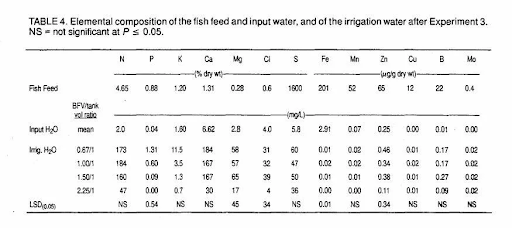
Lets go thru the nutrients 1 by 1 and dispel the myth that sand makes all the nutrients that plants crave. This is taken directly from McMurty nutrient white paper.
Nitrogen 160 - 183ppm . This is way to high most aquaponic systems run 20 - 45 ppm. This cause a whole range of growth issues in plants.
Phosphorous 0 - 1.3 this is obscenely low a healthy aquaponic system should be 30 - 40 ppms for proper growth in aquaponics its almost non existent in his sample. This cause lack of node formation, leaf deformities and prevents fruit production entirely at that level.
Potassium 0.7 - 1.5 ppm. it should be 65 - 100 ppm depending on crop. This is extremely low and slows root growth and prevents flowering at these low levels entirely. This does not provide enough for any healthy plant growth better get anything with flowers or fruit.
Calcium 167 - 184 ppm. This is very high most aquaponic systems range from 60 - 100 ppms. At those extremely high levels you will experience nutrient lockout issues with things like iron and phosphorous and other nutrients as the nutrient ratios are so far out of bounds they start to bind up and form calcium phosphate which is probably why they have almost no phosphorous at this point.
Magnesium 58 - 65 ppm. This is the only nutrient in the proper range from his entire water report which is 35 for greens and 50 for flowering crops. Its a little high but generally with in the safe range for aquaponics.
Chloride 31 - 39 ppm. These are low but in the safe range. You generally want them in the 60s or 70s for best growth but this is still high enough to help the plants.
Sulfur 36 - 60 ppm. This is in the safe range but depending on crop a little low for any plant that produces alot of sulfur compounds.
Iron 0 to 0.02 ppm. it should be 2 - 3ppm. This is an extreme deficiency which greatly retards growth in plants and makes it almost impossible for plants to continue to not only produce chlorophyl but also to continue to build new tissues at such an extreme deficiency.
Manganese 0 - 0.02 ppm. It should be .6 - 1 ppm. This is another extreme deficiency greatly impacting plant health as plants need manganese to produce many of there secondary compounds like flavonoids, terpenes and other plant defenses against the environment. Like Iron Manganese must be regularly amended as its rapidly oxidized by the high oxygen levels of aquaponic systems. This is not fixable with fish feeds as the same process also happens during digestion.
Zinc .11 - .46 ppm. It should be .3 - .5 ppm. The .11 is too low but the other 3 are in the proper range.
Copper 0.01 - 0.02 ppm. This is an extreme deficiency reducing plant growth and greatly effecting secondary metabolite production. This greatly weakens the plants immune system at such an extreme deficiency.
Boron 0.09 - 0.27 ppm. This is another huge deficiency aquaponic systems want 0.6 - 0.8 for optimal growth and optimal plant health in aquaponics. At such low levels the plants have a weakened immune system and reduced wax production making some plants much more susceptible to heat and cold as well as insect attack and molds.
Molybdenum 0.02 ppm. It should be .5 - 1 ppm. This is another extreme deficiency. Aquaponics uses nitrates as its primary nitrogen source. Because of this aquaponic plants use much more molybdenum than soil plants as they have to use molybdenum to convert nitrates into a useable form of nitrogen. Because of this its rapidly stripped from the water in aquaponics and is not found in fish food at all generally so it must also be amended into any aquaponic system. It also attributed to anthocyanin production meaning your red lettuce is no longer red any more and your plants have much less frost and heat tolerance as well because of the lower anthocyanin levels.
As any one who has done aquaponics for any length of time can see these numbers simply are deficient almost completely across the board.
Feel free to repost / share this so we can move past this old failed method.